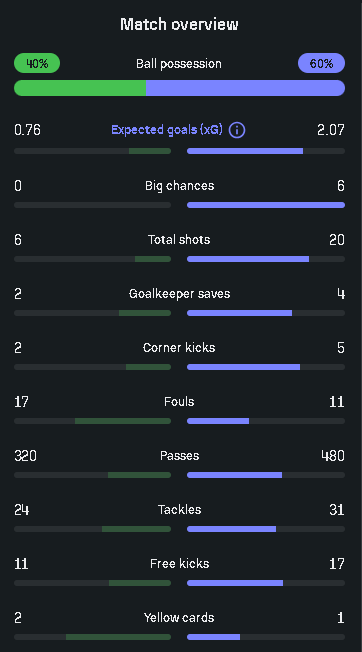


In this Tottenham vs Arsenal match, I analyse the key tactical moments, individual performances and turning points of the game.
Big game. North London Derby. But with a different weight. Tottenham came in at a delicate moment, change of manager, Thomas Frank out and Igor Tudor in as an interim solution until the end of the season. The question was clear: was the problem structural or was it the coach?
On the other side, Arsenal were leading the Premier League, but with Manchester City two points behind after beating Newcastle. Maximum pressure and still fresh in the memory the 2-2 against Wolves after being 2-0 up.
On paper, unstable emotional balance on both sides, but on the pitch it was all Arsenal.
The first half begins with an evident pattern: absolute territorial dominance from the visitors. After 9 minutes, 82% possession. That’s not normal in a derby. Tottenham could barely breathe. After 19 minutes they had only two passes in the final third. But, and here comes the important reading, that doesn’t necessarily mean emotional control from Arsenal. Tottenham clearly wanted direct play, to recover and accelerate quickly. The problem was they rarely recovered the ball in dangerous areas.
The first goal comes quite naturally. Saka gets past Sarr with a bit of fortune, ball into the middle and Eze appears free. A touch to lift it and a clinical finish. 0-1. Eze, who seems to particularly enjoy scoring against Tottenham.
Two minutes later, a serious mistake from Rice in build-up. High, aggressive press and Kolo Muani takes advantage. He wins it, drives forward, cuts inside and shoots low. 1-1.
Right at 47’, Gyökeres receives at the edge of the box with inexplicable space. No one closes him down, no one applies pressure. Powerful shot, no chance for Vicario. 1-2. And here Tottenham’s structural fragility begins to show. It’s not just intensity, it’s organization.
Arsenal grow even more. Eze keeps appearing between the lines, Saka punishes Van de Ven, and the third comes from a defensive mistake. Poor headed clearance from Drăguşin, quick combination and Eze taps in for 1-3. There’s a controversial moment with Kolo Muani’s goal ruled out for an alleged foul on Gabriel. It’s one of those situations that usually go unnoticed in corners, but here it was overturned.
Even so, the feeling in the second half is clear: Arsenal were even more superior than in the first. Fewer distractions, fewer losses in dangerous areas, more emotional control.
Tottenham tried to respond with individual bursts: Xavi Simons trying to solve too much on his own, Spence creating one of the few truly dangerous moments with a cross to Richarlison, forcing Raya into a goal-line save that was celebrated like a goal.
But the game was already open. And in stoppage time, high press, recovery, Ødegaard releases Gyökeres and the Swede closes the night. 1-4.
Post-match
A heavy result, but there are different readings for each side.
For Tottenham, I don’t think this already destroys Tudor’s work. It was the worst possible test to start with and the team did show intensity at moments, but structurally they remain fragile. Too much space between the lines, wrong defensive decisions and little quality in build-up under pressure. The fight is not for the top, it’s for stability.
For Arsenal, the win is huge. Not just for the 3 points, but for the context. After the slip against Wolves and with Man City breathing down their neck, this was a game where any stumble would create ghosts. They were dominant, emotionally controlled the derby and in the second half imposed their superiority even more clearly.
Tottenham understand that changing the manager does not erase deeper problems overnight.