

In this Inter vs Bodø/Glimt match, I analyse the key tactical moments, individual performances and turning points of the game.
Heavy night in Milan. Inter stepped onto the pitch forced to overturn the 3-1 suffered in the first leg against FK Bodø/Glimt. Two goals to take it to extra time, three to settle it. On paper, a glaring individual gap. In the current Champions League context, a Bodø side that had already beaten Manchester City and Atlético de Madrid and that was starting to earn the status of the competition’s “uncomfortable team.”
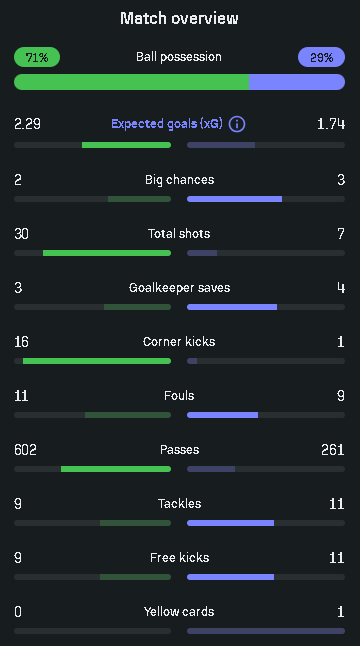
The first half was exactly what was expected and at the same time not enough. Inter with 74% possession, 12 shots, almost permanent circulation in the attacking half. Dimarco crossing time and time again. The problem? Everything too predictable. Too many crosses, little interior penetration, little creativity to dismantle an organised and disciplined 4-4-2.
The numbers impress: eight shots after 26 minutes, clear territorial dominance, but dominating is more than piling up crosses. Bodø were not parking the bus. They were compact, aggressive in their cover and comfortable letting Inter have the ball far from their goal.
The second half brings the moment that defines the tie. In the 58th minute, a serious mistake from Akanji near the edge of the box, shot saved by Sommer and Hauge appears to tap in. 0-1 and 1-4 on aggregate. A bucket of cold water in a stadium that was already starting to show anxiety.
Inter had volume, had corners and had attacking presence, but ideas? Very few. It was insisting on the same solution, as if repeating crosses would eventually break a defence that was comfortable in that scenario.
In the 68th minute, Akanji hits the post from close range. That moment sums up the night: when a clear chance finally appears, it’s missed. And four minutes later, maximum punishment. Cross from Hauge, control and finish from Håkon Evjen with enormous quality. 0-2. 1-5 on aggregate. Elimination practically sealed.
Bastoni’s goal in the 76th minute, from a scrappy corner, no longer changed the direction of the story. It was a reaction of pride, not real belief. Inter switched to desperation mode, pushed everyone forward, piled up even more crosses and even Dimarco’s substitution in the 81st minute feels strange. If the team lived off that resource all game, why remove the best executor precisely in the final phase?
And it’s inevitable to talk about the Italian context. Napoli out early. Inter fall in the playoffs. Juventus and Atalanta also at risk. If total absence in the round of 16 is confirmed, it’s impossible not to question the current competitive weight of Serie A in Europe. Is the league balanced? Yes, but perhaps balanced by limitations.
Post-match
Bodø/Glimt did not win by accident. They won because they knew how to suffer, knew how to wait and were lethal at the right moments. With much less possession, much less reputation, but more composure.
Inter leave with numbers that tell one story and a result that tells another. Territorial dominance is not synonymous with real superiority. There was a lack of creativity, a lack of unpredictability and a lack of adaptability when plan A wasn’t working.
Fair elimination on aggregate and another European night that forces a look at Italian football with some concern. When the budget gap does not translate into direction of solutions, the problem is not bad luck.