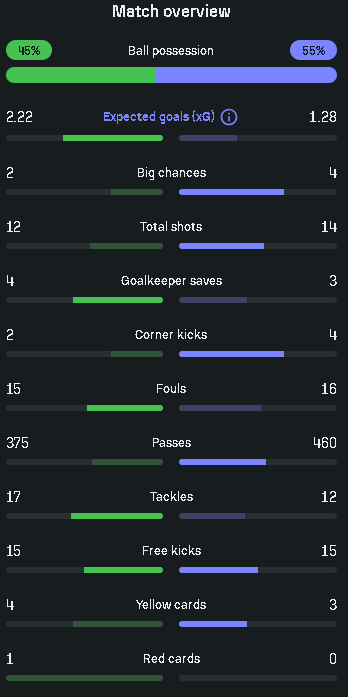


In this Newcastle vs Man United match, I analyse the key tactical moments, individual performances and turning points of the game.
St. James’ Park hosted a match full of questions. Newcastle United, stuck in 13th place and with the season drifting away from last year’s promise, needed a response. On the other side, Manchester United arrived unbeaten under Michael Carrick, but with a strange feeling: three recent wins that convinced few. Strong results, but performances not quite at the same level.
Newcastle started more aggressive, more intense, taking possession and winning duels. Joelinton, Tonali, Gordon… there was energy, there was intent. United looked too comfortable, as if expecting the game to solve itself. Yoro had to clear, Lammens was called into action, and for long stretches the visiting side failed to control midfield.
As time passed, balance appeared. Bruno Fernandes began to see more of the ball, Mainoo found some space between the lines, and the game gained a competitive rhythm. It was not a brilliant technical spectacle, but it was intense, contested, with tough tackles and quick transitions. Joelinton saw yellow in a situation that felt forced to me, and it is curious how light fouls are given in midfield, but then inside the boxes, where everything is more decisive, play is often allowed to continue.
At 45+2, Jacob Ramsey received a second yellow for simulation. Here I agree: Lammens does not touch him, there is clear intent to win the foul. Newcastle were down to ten and it seemed as if United had received an unexpected gift.
At 45+3, Bruno Fernandes committed a foul inside the box. Clear penalty. And at 45+5, Anthony Gordon struck low, down the middle, without hesitation. 1-0 to Newcastle, even with ten men. At 45+9, a wide free-kick delivered by Bruno, intelligent movement from Casemiro to the near post and a delicate glancing header. 1-1.
The second half brought an almost surreal scenario. Newcastle, with ten, continued to be more aggressive. They pressed, had more possession in the opening minutes, seemed emotionally stronger. Anyone watching without context would not have guessed they were a man down. United, with the extra player, played slowly, predictably, without accelerating where they should. Changes were made, Ugarte came on, Dalot came on, but the team did not gain quality in decision-making or intensity.
And that is starting to become worrying. Because with more space, with more time, United could not break down a reduced opponent. Mbeumo was quiet for too long, only coming off late. Bruno still tried to take responsibility, whipped dangerous balls into the box and Yoro forced Ramsdale into a big save. Zirkzee tested the English goalkeeper again, but it was all individual effort, not collective dominance.
And in the 90th minute, the punishment arrived. Quick counter-attack, Trippier releases Osula, who drives down the right. Malacia lacks the pace to keep up, Osula cuts inside, adjusts his body and curls a shot home. 2-1. A goal of conviction, from someone who believes even when the odds suggest otherwise.
Post-match
A huge victory for Newcastle. An incredible way to win: play an entire half with ten men and still show more ambition and intensity than the opponent says a lot about character. The team may be in an uncomfortable position in the table, but the competitive identity is still there.
Manchester United, on the other hand, leave a worrying image. They continue to win some matches, but when they need to take control, when they are clear favourites and have a favourable context, like today with an extra player, they lack authority. They lack emotional control and the ability to impose rhythm.
Bruno remains the beacon, another assist and total influence. But a team that wants to fight at the top cannot depend solely on the inspiration of its captain.
In the end, St. James’ Park celebrated a victory worth more than just three points.