
 · 2 min read
In this Germany vs Curaçau match, I analyse the key tactical moments, individual performances and turning points of the game.
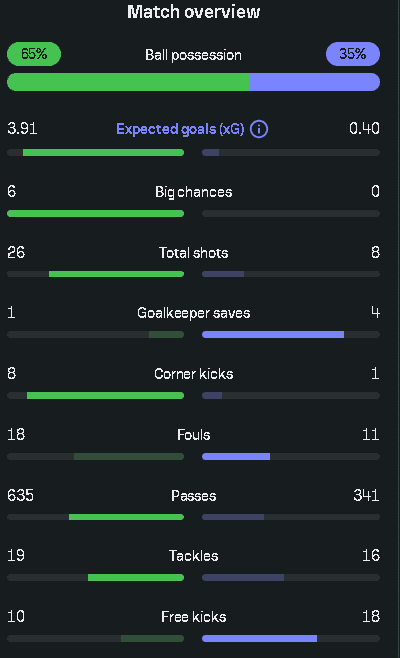
Germany came into the match carrying everything that was expected of them: responsibility, clear favouritism and the obligation not only to win, but to begin the World Cup with a strong statement. On the other side, Curaçao carried the burden of being, quite possibly, the weakest team in the tournament. And the match confirmed almost all of that, though not without one unexpected moment along the way.
Germany started seriously, dominating possession, pressing high and clearly looking to settle the game early. In the 6th minute, they built through the centre, Wirtz received between the lines and slipped the ball to Nmecha. The striker, from outside the box and slightly to the left, curled a quality effort into the far corner. A clean, technical finish that immediately showed the difference in level.
Germany remained on top, with plenty of space to play, especially down the left where Wirtz kept creating problems. Curaçao tried not to collapse in the opening stages and showed some courage, but lacked the tools to slow down the German pressure.
And just when everything pointed towards a completely comfortable German performance, Curaçao produced their moment of the match. In the 21st minute, a quick counter-attack saw Locadia released before the ball fell to Comenencia, who made no mistake. It was a simple but effective finish. A clear mistake from Neuer, who should have saved it. The 1-1 was unexpected, but it carried enormous significance, even a historic one, for Curaçao.
Germany reacted immediately, although for a few moments it was more emotional than organised. Still, the quality gap soon reappeared. In the 38th minute, a well-delivered corner found Schlotterbeck, who escaped his marker brilliantly and rose completely unchallenged. His powerful header left no chance for the goalkeeper. A goal born from physical superiority and poor defensive organisation.
Until half-time, Curaçao resisted however they could, showing plenty of heart and commitment, blocking shots inside the box and throwing bodies on the line. But deep into stoppage time, a clear foul on Nmecha inside the area resulted in an obvious penalty. In the 45+4th minute, Havertz stepped up, waited for the goalkeeper to commit and calmly placed the ball into the opposite corner. 3-1, and the feeling that the match was effectively over.
The second half almost immediately removed any remaining doubt. In the 47th minute, Kimmich lifted his head and delivered a perfect pass into Musiala’s run. The timing was flawless and Musiala, one-on-one with the goalkeeper, finished with ease. A simple goal, but executed perfectly.
From there, the pace dropped. Germany shifted into management mode, still dominant but without the same intensity. Even so, chances kept coming. In the 68th minute, a well-worked move ended with Undav lofting the ball into the area and Brown arriving to finish calmly, taking advantage of yet another moment of defensive disorganisation.
The game was completely stretched by then and Germany took the opportunity to inflate the scoreline. In the 78th minute, a move down the right saw Kimmich patiently wait inside the area before picking out Undav, who struck first time. There was a slight deflection, but the ball still found the net. Then, in the 88th minute, Germany recovered possession quickly and launched a direct transition. Undav carried the ball forward before releasing Havertz at exactly the right moment, and the forward lifted the ball delicately over the goalkeeper. A classy finish to round things off. 7-1.
More than the result itself, what stood out was the difference in intensity, quality and decision-making. Curaçao had their moment and made history, but they never had the tools required to keep up with Germany’s level.
Post-match
The result was expected, but there are still some interesting conclusions. Germany did their job, dominated and finished efficiently, but they also showed moments of complacency that could be punished against stronger opposition.
Curaçao, meanwhile, leave with a historic goal and a competitive attitude, but ultimately confirmed the limitations that were already expected before the tournament.