
 · 2 min read
In this Ivory Coast vs Norway match, I analyse the key tactical moments, individual performances and turning points of the game.
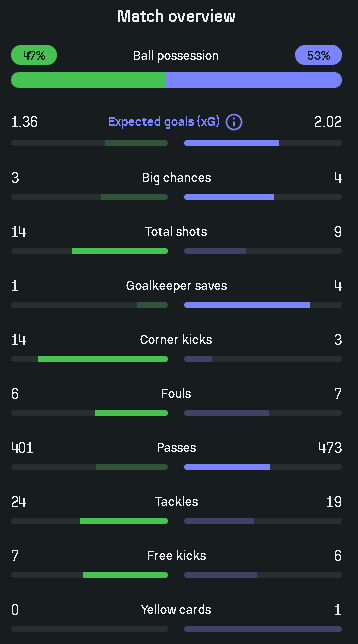
It was a well-balanced game on paper, and on the pitch it lived up to that for long periods. Two national teams with different strengths: Ivory Coast with more collective play, more players involved, and Norway with moments of individual quality capable of deciding everything in an instant.
The first half was very cagey for quite a while. Both teams showed each other a great deal of respect, perhaps too much. Very little risk, plenty of organisation, and a constant feeling that neither side wanted to be the first to make a mistake.
Ivory Coast actually looked slightly more comfortable. They had more of the ball at times, moved it around better, and were very solid defensively. They did not allow Norway to play through the middle, which took a lot out of their game, especially Ødegaard, who was very quiet for most of the first half.
But there was also a clear problem: they lacked danger. They got into promising areas, mainly through Pépé, but the final action always let them down. Either the shot was off target, or the decision was the wrong one.
Norway had a different problem. They struggled to link play through the middle and relied heavily on attacks down the flanks, often in a predictable way. Sørloth playing out on the right continued to look like a strange idea, and it limited their attack considerably.
Even so, it only took one moment to change everything. In the 39th minute, Ødegaard finally came to life. He received the ball, looked up and found Nusa in a one-on-one situation. Nusa drove at his defender, shifted the ball inside and curled a shot that gave the goalkeeper no chance. The ball flew into the top corner. A goal of pure talent, created almost entirely out of nothing.
That changed the game completely. Norway grew in confidence and almost doubled their lead moments later. Sørloth delivered the cross, won the aerial duel, the ball fell to Haaland, and only a clearance from Sangaré prevented the second goal. That was the moment when the game could have slipped away.
Ivory Coast’s response in the second half was clear. They pushed higher up the pitch, started pressing more aggressively and forced Norway deeper. It was no longer just possession, it was genuine attacking presence.
Pépé became more involved, Diallo did too, and the game was played much closer to the Norwegian penalty area. Norway, meanwhile, were happy to sit deeper and look to break on the counter.
The equaliser arrived naturally in the 74th minute. A well-worked move, good combination play between Pépé and Diallo, with Diallo receiving the ball inside the box. Ødegaard tried to recover but could not stop him. Diallo carried the ball, cut inside and placed his finish into the corner. A brilliantly worked individual goal, but one that came from excellent collective play.
With the scores level, the game opened up again. Norway realised they needed more and began to push forward once more. Ødegaard grew into the game, became more influential and started linking the attacks much better.
That proved decisive. In the 86th minute, a quick move saw Bobb find Ødegaard with a perfectly timed pass, and he calmly squared the ball for Haaland to score. It was a simple pass into the middle of the box and Haaland tapped it in. It was not pretty, and it even looked as though he might miss, but the only thing that mattered was that it went in.
Until the end, Ivory Coast threw everything forward. They pushed, crossed, and took risks. They came close from a Diallo free-kick deep into stoppage time, but Nyland produced an excellent save.
Post-match
A victory that summed up Norway perfectly: not always brilliant, but extremely clinical when their chances came. They made the most of the key moments, and their biggest players made the difference.
Ivory Coast, meanwhile, produced an encouraging performance and enjoyed spells of control, but once again they were let down by their finishing. In knockout football, that comes at a heavy price.