
 · 2 min read
In this Flamengo vs São Paulo match, I analyse the key tactical moments, individual performances and turning points of the game.
A packed Maracanã, a big occasion, but with one curious detail: plenty of emotion, very little fluency. Flamengo came into the match under pressure in the league table, keeping one eye on the top and Palmeiras’ pace. São Paulo arrived with a different mindset, carrying less pressure and almost trying to rediscover what it means to compete on nights like these. Were Flamengo the favourites? Yes, but with plenty of respect for the opposition.
The first half never really came to life. Early on, Calleri cushioned the ball with his chest before Wendell fired over the bar in one of those moves that promised far more than it delivered. At the other end, Pedro released Lorran in behind, but Rafael dealt with it comfortably. That summed up the opening stages: good ideas, very little continuity.
The best moment up to that point came in the 19th minute. A move down the right saw Royal overlap, the ball was played into the box, and Samuel Lino showed great awareness by laying it back. Pulgar arrived unmarked and struck it powerfully, only to see his effort crash against the crossbar. It was the sort of chance that usually ends in a goal. It did not, but it showed the way forward.
The problem was that the game stopped far too often. Too many fouls, too many interruptions, and neither side could build any rhythm. That suited São Paulo, who defended well and prevented Flamengo from settling into the match. They even had the ball in the net in the 28th minute when Marcos António finished well following an aerial duel, but he was clearly offside. The decision was straightforward.
Overall, the first half produced a slightly unexpected conclusion: São Paulo had edged it. Not because they created more chances, but because they handled the uncomfortable nature of the game better. Flamengo, with a disjointed midfield and too many loose balls, fell below expectations.
The second half changed the tone slightly. Flamengo pushed higher, increased the pressure and gradually forced São Paulo deeper. In the 56th minute, Lorran delivered an excellent cross and Bruno Henrique tested Rafael, who responded with a superb save. It was a warning.
The breakthrough came a minute later. In the 57th minute, Lorran’s corner was flicked on by Jorginho at the near post, allowing Léo Pereira to apply the simplest of finishes from close range. A quiet touch, but an effective one. Flamengo had finally found the breakthrough in a game that demanded patience.
For a while, it looked as though they had everything under control. São Paulo were offering very little going forward and rarely threatened. But football has a habit of ignoring logic. In the 70th minute, a cross into the area found Calleri, who did exactly what great strikers do. He timed his movement better than Vitão, attacked the space and powered a fine header into the net for the equaliser.
From there, the match drifted into an awkward phase. Flamengo wanted to push for the winner but could not find the extra gear they needed. São Paulo had little interest in opening the game up. There was an appeal for handball inside the area, but the arm position was completely natural. Time ticked away with very little genuine danger.
There was one final twist in stoppage time when Samuel Lino thought he had won it. After a scramble inside the box, he smashed the ball into the net, only for the goal to be ruled out because Wallace Yan had been offside earlier in the move. Frustration filled the Maracanã.
Post-match
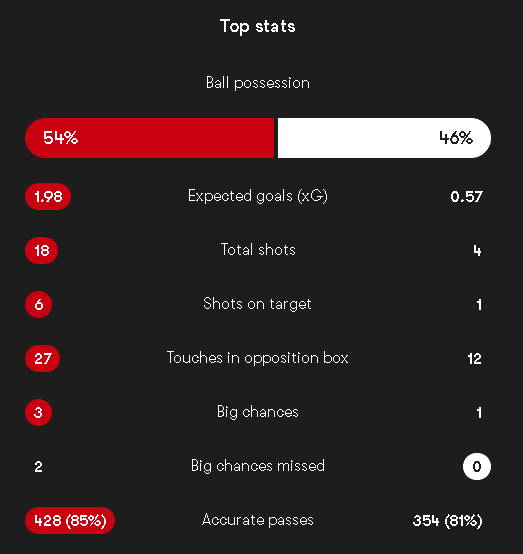
It is a draw that feels much better for São Paulo than it does for Flamengo. The home side showed greater attacking intent after the break, but they were never dominant enough to deserve anything more.