
In this Bosnia vs Italia match, I analyse the key tactical moments, individual performances and turning points of the game.
In a heavy scenario, one of those nights where the atmosphere matters just as much as the players, Bosnia and Herzegovina hosted Italy with more than just a match on the line: a place at the World Cup. And what we saw was a harsh picture of an Italy side that no longer scares anyone.
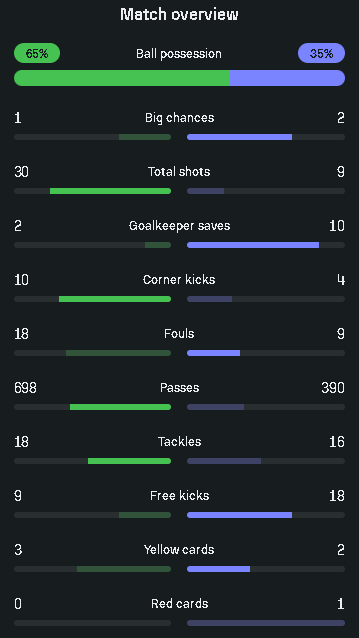
The opening confirmed the expected plan. Bosnia were reactive, vertical and always looking for the transition. Italy had more of the ball, but did not really know what to do with it. And, interestingly, the first real approaches all came from Bosnia, who were more aggressive, more direct and more dangerous.
But in the 15th minute, the game turned on a detail. A clear mistake in Bosnia’s build-up and Moise Kean took advantage of it with class, a composed finish and 0-1. A goal that did not come from construction, but from a gift. And it looked like that could change the direction of the game.
It did not. Italy continued without any real control and Bosnia, even with obvious technical limitations, remained the more uncomfortable side. They created, they shot, they insisted, mostly through crosses and second balls, but always with intent. Džeko, at 40 years old, was still a reference point and a constant presence. The key moment of the first half came in the 41st minute: Bastoni was sent off. Correct decision, last man, no debate. And from there the game changed completely. Italy lost the little balance they had and went into survival mode.
The second half was basically one long Bosnia attack. High possession, plenty of crosses, lots of insistence. Quality? Not always. But desire? Absolutely. And on the other side, an Italy team shrinking deeper and deeper, wasting time and accepting risk as a strategy. And that rarely ends well. For a long time, it looked like Bosnia still would not manage it. They crossed, they tried, but without much composure. And here Donnarumma also deserves credit, because he kept Italy alive for a while. But in the 79th minute, the inevitable happened. Cross into the box, chaos in the area, incomplete clearance and Haris Tabaković equalised. Not a beautiful goal, but a deserved one.
Extra time brought more of the same: Bosnia on top, Italy trying to breathe. But by then they had no energy, no ideas and no way out. And when the match reached those final details, it became clear that Italy were already mentally gone. In the penalty shootout, there was no surprise, at least not based on what the game deserved: there was confirmation. Bosnia were calmer, more confident and more prepared. Italy missed, froze and collapsed.
Italy miss a third consecutive World Cup. And that is not bad luck, it is a deep structural problem.
Post-match
A historic moment for Bosnia, who with clear limitations still achieved something enormous. Organisation, belief and atmosphere made the difference.
For Italy, this is total collapse. Missing three World Cups in a row is not a temporary crisis: it is sporting bankruptcy.