
 · 2 min read
In this South Africa vs Canada match, I analyse the key tactical moments, individual performances and turning points of the game.
It was one of those typical knockout games between two national teams that do not exactly excite, but both knew they had a rare opportunity here. And that was clear from the start: more nerves than quality, more desire than ideas.
The opening stages were actually fairly open. South Africa tried to play out from the back, Canada responded with counter-attacks, and for a few minutes it looked like we might have an interesting game. But it quickly became obvious what the pattern would be: plenty of intent, very little execution.
South Africa had one or two promising attacks, very direct and largely based on long balls, but there was always one obvious problem in the final third. They lacked quality with the final pass, they lacked composure in the final decision. It was always almost.
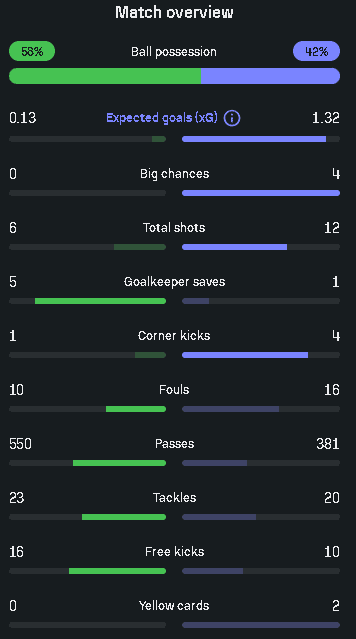
Canada gave off a slightly different impression. Less possession, but more dangerous whenever they got forward. Jonathan David had one of those moments inside the box, with space and time, but he took so long to decide what to do that the chance disappeared. That pretty much summed up his first half: slow, uninspired and always one step behind the game.
Even so, Canada looked the more likely to score. From a wide free-kick, Cornelius found himself completely unmarked inside the six-yard box and got his head to the ball, but without any direction. At this level, that is the kind of chance that has to end in a goal or at least force a brilliant save.
There was also one moment that summed the game up perfectly: the ball at Ronwen Williams’ feet, nobody pressing, nobody moving, and everyone stood there for a few almost absurd seconds, as if the game had been paused. A lack of aggression from one side, a lack of ideas from the other.
Towards the end of the first half, Canada began to apply a bit more pressure. From a corner, the ball dropped inside the six-yard box, there were goal-line clearances, shots, saves, and a clear feeling that the goal was about to come. But it never did. That also said a lot about the finishing of both teams.
The second half did not change much. South Africa had more of the ball, but it was completely sterile possession. They moved it around, they tried, but almost always far away from the penalty area, without causing any real problems.
Canada, meanwhile, started to find more space. On a counter-attack, Tani Oluwaseyi timed his run well, got his shot away, and Ronwen Williams produced an excellent save. Moments later, Mbokazi cleared one virtually off the line. That was when it felt like the game could swing one way.
The introduction of Davies brought a different energy. More pace, more ability to beat his man. That opened the game up in the closing stages. Jonathan David also had an effort from a tight angle that forced another save from Williams.
And just when the game looked to be heading for extra time, the decisive moment arrived. In the 90+2nd minute, a cross into the box was only half-cleared by the South African defence, the ball dropped invitingly on the edge of the area, and Eustáquio did not hesitate. He placed his shot perfectly, with the ball clipping the post before going in. A simple goal in its build-up, but massive in its impact. 0-1 and a historic goal.
From that point on, it was desperation from one side and control from the other. And in the end, it was probably fair. Canada did not play a great game, but they were always the more dangerous team.
Post-match
A poor game, decided by a single moment. Canada go through with relative justice because they were the only team that consistently looked capable of creating danger.
South Africa bow out with plenty of possession, but absolutely no attacking impact. Having the ball is not enough, and today that was more obvious than ever.