

In this Aston Villa vs Liverpool match, I analyse the key tactical moments, individual performances and turning points of the game.
Villa Park carried the weight of the end of a season. Two teams level on points, with the Champions League close enough to disappear with one mistake. And the game began exactly as expected from two sides with more space than ideas. At 2 minutes, Rogers accelerated, Watkins spun away from his marker and shot, but Mamardashvili reacted well. It was an early warning: Villa’s plan was built around attacking space, not controlling possession.
Liverpool took time to understand the game. They looked heavily dependent on Ngumoha, a 17-year-old, which in itself says a lot. At 8 minutes, Watkins appeared in behind again, glided past Van Dijk with quality, but lifted his effort over the bar. Villa kept threatening, even without much of the ball. Liverpool, meanwhile, had possession but no presence.
The first moment that looked like it might change the match came around the 30-minute mark. Ngumoha burst forward, found Gravenberch, whose shot was only partially saved by Dibu Martínez, and Gakpo tapped in the rebound. Goal disallowed. Offside. But the feeling remained: every time Rio touched the ball, something happened.
Liverpool improved slightly after that. At 31 minutes, Szoboszlai forced a good save from Dibu with a strike from distance. More possession, more territory, but still very little clarity. And one issue stood out clearly: Gakpo could not function as a focal point. The crosses led nowhere.
And just when the game felt relatively under control, punishment arrived. Minute 42. Short corner, rehearsed move, Rogers found himself free on the edge of the area and curled the ball beautifully into the far corner. Far too much space, far too much freedom. 1-0.
The second half started with the same script: Liverpool on the ball, Villa waiting. But at 52 minutes, efficiency finally arrived. Free-kick from Szoboszlai, Van Dijk attacked it and headed home the equaliser. A goal that almost felt inevitable considering set-pieces were the only real source of danger Liverpool had.
But then the game entered a short and decisive spell of chaos. At 57 minutes, Szoboszlai slipped on his own, Rogers seized the moment, drove forward and crossed low for Watkins to finish at the front post. An individual mistake punished immediately. And right after that, Liverpool completely lost their balance. Watkins found space again, threatened again and Villa sensed blood.
At 73 minutes came another blow. Corner delivered, Tielemans shot, incredible save by Mamardashvili, rebound fell to Pau Torres, another almost impossible save, but at the third attempt Watkins finally tapped in. 3-1. Persistence, presence and pure hunger inside the box.
Liverpool tried to react through possession, but by then there was no soul left in the performance. And at 89 minutes, the game was sealed with pure quality. Watkins held the ball up and released McGinn, who, with time and space, curled it into the top corner. A brilliant goal that perfectly summed up the match: complete freedom on the edge of the area. There was still time for Van Dijk to score again at 90+2 from a corner, but it changed nothing. It only softened the scoreline.
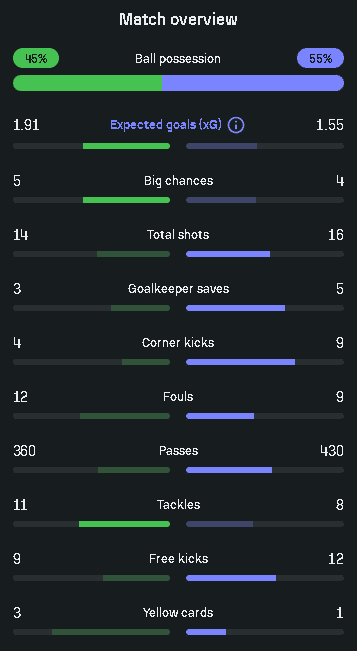
Liverpool had the ball, but they never had emotional or defensive control. And in games like this, that costs you heavily.
Post-match
Aston Villa won because they were the better team in the moments that mattered. They did not need to dominate, they only needed to know when to accelerate.
Liverpool, defensively, look and are extremely weak.