

In this Belgium vs Tunisia match, I analyse the key tactical moments, individual performances and turning points of the game.
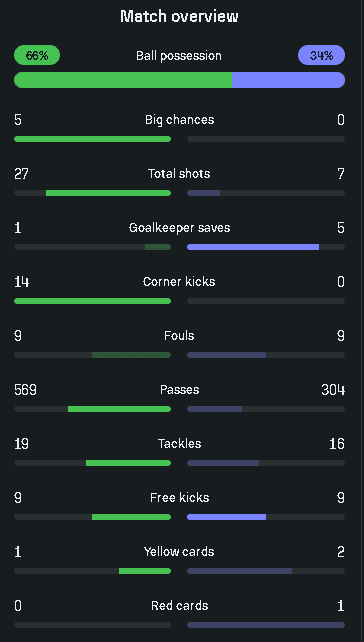
Belgium and Tunisia met in a friendly that, on paper, looked like it could be balanced in terms of tempo, but it quickly revealed a clear gap in quality. Belgium are no longer the feared side of 2018, having lost some collective strength and key figures, but they still possess enough talent to win games comfortably. Tunisia, meanwhile, arrived with the attitude that is often associated with African national teams, but with obvious limitations when the level rises.
The game started with Belgium on the front foot, looking to take control immediately, and that was clear from how often Doku was involved down the left. Almost everything in Belgium’s attack flowed through him, with his pace, dribbling and ability to create danger.
Tunisia tried to respond with one of the first dangerous moments of the match, as Omar Rekik fired over the bar after a well-worked cross, but it proved to be an isolated incident. From that point onwards, Belgium were in complete control, even if they were not always clinical in the final third. De Bruyne had a good opportunity after a pass from Doku, but failed to hit the target.
As the minutes passed, Belgium’s dominance became more obvious and the opening goal arrived naturally in the 28th minute. Doku received the ball on the left, entered the box calmly, delayed the play perfectly and then squared it for Trossard to tap home. It was a move that summed up the game up to that point: individual brilliance from Doku and a simple finish.
Very little changed before half-time. Belgium remained on top, Doku continued to be the most dangerous player on the pitch and Tunisia struggled to play out with any quality. There was also some tension just before the break, with De Bruyne involved in an argument following a foul on Doku, but nothing that altered the course of the match.
The second half began in the same fashion and the second goal arrived in the 52nd minute. Tielemans delivered an excellent cross from the left and De Ketelaere rose well to head home. It was an important goal for a player who had been fairly quiet until then, but who appeared at exactly the right moment.
Interestingly, Tunisia’s best spell came shortly afterwards, with Achouri striking the crossbar with a superb effort. It was the only real moment where they showed the ability to trouble Belgium, but everything changed in the 62nd minute when Gharbi received a second yellow card for a foul on Doku and left Tunisia down to ten men.
From there, the game was effectively over. In the 65th minute, Doku once again made the difference, finding De Bruyne on the edge of the area and the midfielder, given far too much space, finished intelligently to make it 3-0. A simple move, but one that highlighted the decision-making quality of a top-level player.
With more space and less resistance, Belgium controlled the game and continued to add to the scoreline. In the 85th minute, Fernández-Pardo did well on the left, crossed into the middle and, after a scramble in the box, Lukebákio finished acrobatically from close range. Two minutes later, in the 87th minute, Raskin took advantage of a loose clearance on the edge of the area and struck first time to complete the scoring.
The result looks heavy, but it accurately reflects the match: a dominant Belgium side, driven largely by the talent of Doku, against a Tunisia team that tried but never had enough quality to compete on equal terms.
Post-match
The feeling remains that this Belgium side is far from its peak, but it is still dangerous when given space and when its individual talents are inspired, especially players such as Doku and De Bruyne.
As for Tunisia, they showed commitment and effort, but also made it clear that against teams of this level, the margin for error is tiny and the technical gap becomes decisive.