

In this Burnley vs Man City match, I analyse the key tactical moments, individual performances and turning points of the game.
There are moments in a season where it does not matter how, it only matters to win and this was exactly that type of match for Man City. The pressure was all there: the possibility of returning to the top of the table, an accessible opponent and that recent history that leaves no margin for error.
City started as expected: dominant, on the ball, pushing Burnley back. In the opening minutes, the difference in rhythm and quality was clear. There was a strong individual play from Bernardo to open things up and, on the other side, an unexpected response from Burnley that even caused some concern, with a shot inside the area and Donnarumma making a good save. But that was it: a single warning.
Because in the 5th minute, the match started to be written. Doku used his physicality, bought time and released the ball at the right moment for Haaland. The Norwegian carried it forward and, face to face with the goalkeeper, did not force it, lifting the ball with class, a perfect chip. Cold, simple, devastating. 0-1. It is the kind of goal that kills hope before it even has time to grow.
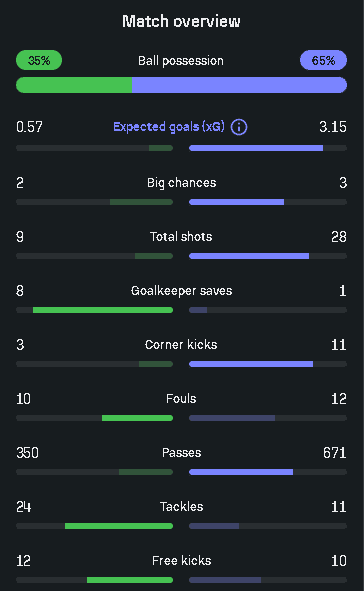
From there, the script does not change. City settle in the attacking half, circulate the ball patiently and keep creating. Not in an explosive way, but consistently. And here comes an important point: Dubravka keeps Burnley alive. There is a ridiculous close-range save that prevents the second goal and keeps the match in reach.
Burnley try to come out on the counter, but lack quality in decision-making. When they have space, they make the wrong choice. When they have time, they fail technically. And against this City, that costs you, or rather, you fail to take advantage. The match drifts into a rhythm that is almost too controlled. City dominate, but do not accelerate enough to kill it. They keep creating, keep circling, but without that final blow and that leaves Burnley with a minimal hope.
In the second half, the pattern remains, but with a detail that starts to irritate: City do not close the match. In the 55th minute, Haaland hits the post after a good move and it is another sign that the second goal was there, waiting.
And the more time passes, the more that weighs, because Burnley, even with limitations, begin to believe in isolated moments. They do not create much, but they also do not concede. And in a match like this, that is already halfway to chaos. City keep pushing. Shots, crosses, combinations, but the final touch is always missing.
Even so, there is control. Burnley cannot turn occasional possession into real danger. They lack presence in the area and quality in the final pass. In the closing minutes, the pattern repeats itself: City create, Dubravka responds. Haaland tries once more, Bernardo as well, but the ball does not go in.
And in the end, it is a narrow win in a match that could, and should, have been decided much earlier.
Post-match
Man City do what they needed to do: win and put direct pressure on the top of the table. But it leaves a warning: in bigger matches, this lack of efficiency can be costly.