
 · 2 min read
In this Canada vs Bosnia match, I analyse the key tactical moments, individual performances and turning points of the game.
Canada entered its home World Cup with the expectation of establishing an identity and showing that it can be more than just a competitive national team. On the other side was a Bosnia side that had already surprised many by making it this far and arrived with a clear mission: survive, compete and take advantage of key moments.
The opening stages confirmed exactly that. Bosnia started without fear, aggressive in duels and very dangerous from set pieces. The first warning came that way, with Amar Memić finding himself free inside the box after a dead-ball situation, only to waste a chance that demanded much more. It was a clear sign of what the match would become: Canada with more possession, Bosnia more comfortable in chaos.
Canada took time to truly settle into the game offensively. Only after a few minutes did they begin to find space, and their first opportunity came from a corner, with Koné finding room inside the box but striking low and without enough power to beat Nikola Vasilj. It was a chance that highlighted some issues with their finishing.
Bosnia’s goal arrived in the 21st minute and followed the expected pattern. A well-delivered corner, confusion inside the six-yard box, an important touch in a crowded area, and Jovo Lukić, in the right place at the right time, simply tapped the ball home. 1-0.
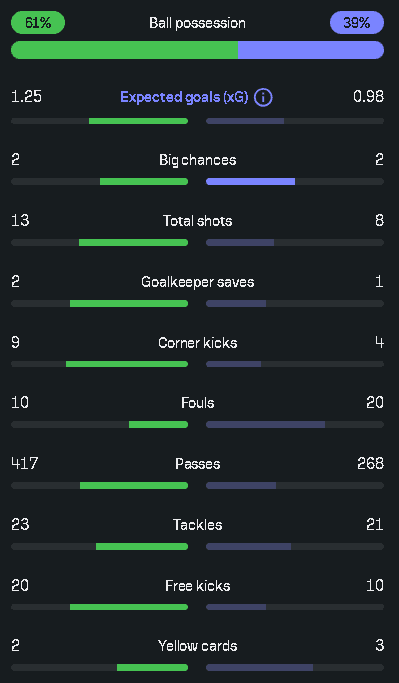
From that point onward, the game changed completely. Canada took total control of possession and pushed Bosnia deeper and deeper. But there was one obvious problem: everything was too predictable. Too many crosses, too many corners, but very little creativity to break down the defensive block. Bosnia dropped into a 5-3-2 shape, defended with everything they had and kept surviving, often through last-ditch clearances and desperate interventions that were not always clean, but were effective enough.
The second half followed a similar pattern, though with even more intensity from Canada. Early on, there was a controversial moment inside the box when the Bosnian goalkeeper appeared to reach the ball first but left some doubts about the contact that followed. Play continued and Canada kept pushing.
The most impressive defensive moment came when Kolašinac cleared a ball virtually off the line in a situation that looked destined to become a goal. Shortly afterwards, Bosnia managed to respond on the counter, with Demirović breaking through one-on-one, only to make the wrong decision by trying to dribble the goalkeeper and wasting the opportunity.
Canada kept coming forward, driven more by heart than by clear ideas. They pushed higher, took more risks, but also left themselves exposed. Eventually, that persistence paid off in the 79th minute. A move from the left drifted inside, Promise David won the initial ball and instantly laid it off to Larin, who had only been on the pitch for a few minutes. The striker turned, shot, and the ball took a deflection off a defender before wrong-footing the goalkeeper. A goal with a touch of fortune, but one born from relentless pressure.
Until the final whistle, Canada threw everything forward, forcing Bosnia even deeper, but without much clarity. Bosnia, despite being under constant pressure, held firm and saw the game out.
It was a match that reinforced two ideas: Canada wants to impose itself, but still struggles to do so effectively; Bosnia may not have superior quality, but they know how to compete as well as almost anyone.
Post-match
Canada showed mixed signs: intensity and determination were there, but clear limitations remain in creativity and decision-making.
Bosnia, meanwhile, once again proved itself to be an extremely competitive, organised and difficult team to beat, even when spending long periods under pressure.