
 · 2 min read
In this France vs Morocco match, I analyse the key tactical moments, individual performances and turning points of the game.
The match began with France showing exactly what everyone expected: intensity, individual quality and a frightening ease in getting into dangerous areas. Within the opening minutes, Mbappé tested his luck from distance before Upamecano arrived at the far post to force Bono into an important save. It was an early warning.
Morocco responded in the way they usually do: a deep defensive block, compact lines and plenty of patience. There was no urgency, nor any need to keep possession simply for the sake of it. The plan was to survive and wait for a mistake.
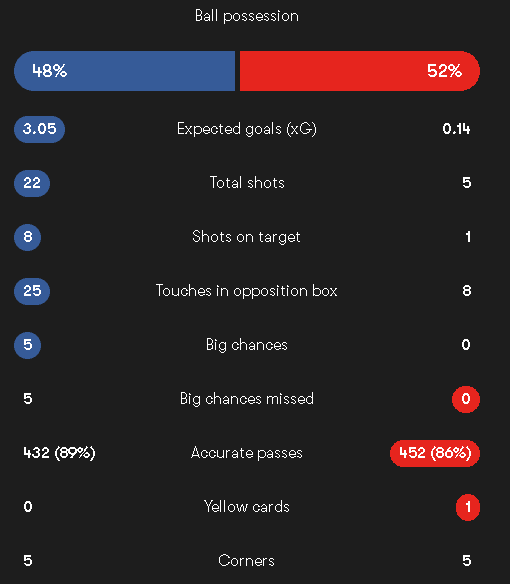
With more possession and greater individual quality, France gradually pushed the game into Morocco’s half. In the 28th minute, they had the perfect opportunity to break the deadlock. Mbappé burst away with his pace, drew the contact and won a penalty. It looked like the ideal moment to confirm France’s dominance, but Bono stood firm and made the save. One of those moments that keeps the opposition alive.
Even so, the pattern of the game barely changed. France remained on top, circulating the ball well, pressing aggressively and winning it back high up the pitch. Doué then had another huge chance after a high turnover, finding himself almost one-on-one with Bono, but the Moroccan goalkeeper produced another excellent stop.
At the other end, Morocco enjoyed spells of possession, but there was no real penetration or attacking intent. They always lacked the final pass and the courage to take greater risks. As a result, the first half ended with a very clear feeling: France were in complete control, yet the scoreline remained unchanged.
The second half followed the same pattern, but with one crucial difference: efficiency.
In the 60th minute, quality finally made the difference. France won the ball back high up the pitch, Mbappé received it in a tight space with Diop in front of him, yet still managed to bend a perfectly placed finish beyond Bono. It was not the result of a brilliant team move, but of a player who needs very little to decide a match.
And once the game became slightly more open, France struck again almost immediately.
In the 66th minute, another high turnover led to a rapid counter-attack. Dembélé drove forward with space in a three-versus-three situation, while Mbappé dragged the defence towards the opposite side. That movement proved decisive. Dembélé attacked the space, cut inside and shot. Bono got a hand to it, but not enough to keep it out. The ball found the net and all but sealed the game.
From that point onwards, the tempo dropped. Morocco tried to push higher and enjoyed more possession, but never managed to turn it into genuine danger. Everything became predictable, and they always seemed to be missing something.
France, now comfortable, began to manage the game. They still looked threatening on the counter whenever they regained possession, appearing far more likely to score a third than concede.
In the end, the match was decided by the very thing that separates these two teams: individual quality. In terms of organisation and discipline, Morocco matched France for long periods. But against players of this calibre, that is often not enough.
Post-match
It was another comfortable victory for France, once again built largely on moments of individual brilliance at the right time. It was not a spectacular collective performance, but it was more than enough.
Morocco once again showed organisation and commitment, but lacked attacking ambition. They defended well for long spells, yet never truly looked capable of challenging the result.