

In this Milan vs Juventus match, I analyse the key tactical moments, individual performances and turning points of the game.
There are matches that carry enough history that they don’t need much more. Milan-Juventus is one of them. But this time, the story was told in a quieter tone. Not because there was a lack of quality, but because there was too much respect. The fight for a Champions League spot weighs heavily, and when it weighs like this, no one wants to be the first to make a mistake.
The opening minutes reflected exactly that. Very tight marking, little freedom and almost no goal threat. In the 13th minute, Milan showed their plan: win the ball back and break quickly, but without support. Leão lost a long ball, Pulisic tried to carry another and ran into two opponents, alone. The idea was right, the execution lacked support.
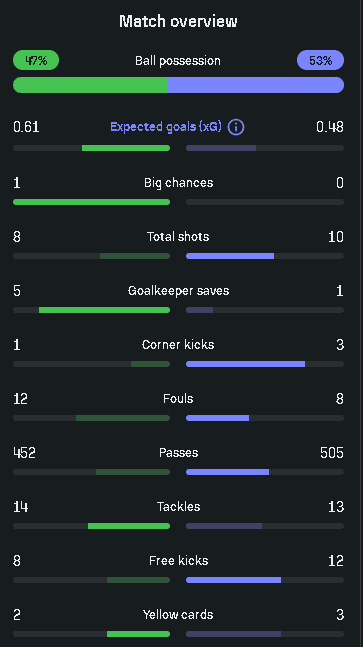
Juventus had more of the ball, but not more danger. They circulated, pushed Milan back, but without breaking lines. Fofana appeared on the right, entered the box and hit the side netting, a mild warning. By the 25th minute, the numbers said it all: very few shots, almost no expected goals. A classic shaped like a tactical battle.
The most interesting moment of the first half came in the 36th minute. Francisco Conceição, full of flair, received on the right, cut inside, feinted, went again and whipped a strong ball into the box. Thuram tapped it in, but he was offside. Goal disallowed. The move remained, and so did the feeling that someone had tried to break the script.
Until half-time, not much else. Leão tried another moment of imbalance, but the pass found no one. Goalless draw, almost mathematically balanced.
The second half brought a bit more life, or at least a big enough mistake to wake anyone watching. In the 50th minute, Milan built well down the left, Leão drove inside and released Saelemaekers inside the box. It was just about doing the simple thing, but the shot hit the crossbar.
Juventus responded without much conviction. Bremer tried from distance, low and easy for Maignan. Allegri’s team had more intent in the attacking midfield, but it didn’t translate into real danger. A lot of play around the box, very little penetration.
In the 61st minute, an attempt to change things: Fullkrug came on, a striker to pin centre-backs, win aerial duels and provide a different reference. The idea was clear, but the game didn’t change much. Milan stayed compact, tight between the lines, hard to break down.
And that’s where the match is explained: two very strong defensive teams, very organised, that practically cancelled each other out. Juventus with more of the ball in advanced areas, Milan more direct and pragmatic. Neither managed to turn control into danger.
The result feels underwhelming for those who wanted a spectacle, but it makes sense given the match. A classic played with the head, not the heart.
Post-match
One of those matches that reinforces an idea: defensive organisation still rules in Italy. Milan were extremely competent without the ball, Juventus had more initiative but little real creativity. Francisco Conceição was one of the few who tried something different. In the end, it felt like neither wanted to lose more than they wanted to win.