
 · 2 min read
In this Netherlands vs Japan match, I analyse the key tactical moments, individual performances and turning points of the game.
First match of the World Cup for the Netherlands and Japan, and there was a clear feeling going into it: stronger individual names on the European side, but a Japanese collective fully capable of causing problems. And that is exactly what happened. It was a match that was more tactical than spectacular, often closed, almost like a chess game, where every mistake could carry huge consequences.
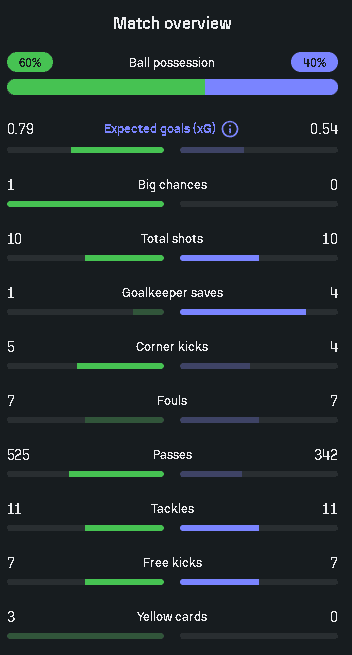
The Netherlands started with more initiative, more possession and more presence in the attacking half, but without much ability to turn that into genuine danger. As early as the 3rd minute, Malen showed what could have been a solution: a good hold-up play, a quick turn and a powerful shot that forced Suzuki into a solid save. It suggested there was a route to success there, but it was never really explored consistently.
Japan, meanwhile, made it clear from the beginning that they had not come simply to defend. Their back five was well organised, the block was compact, and they packed central areas with bodies. This was not a passive team, it was a patient one. They waited, but knew exactly when to press. Gradually, the game became trapped, with little depth and almost no creativity in the final third.
The Netherlands enjoyed more possession, but it meant very little. They circulated the ball, searched for openings, but repeatedly ran into Japan’s discipline. In the 33rd minute, another high press saw four Dutch players close down the ball carrier. Malen got the shot away, but once again it was blocked. The effort was there, but the final detail was always missing.
Set pieces looked like the only genuinely dangerous route for the Dutch, largely because of their physical superiority and height advantage. That became increasingly evident through several moments in the first half.
Japan also showed flashes, mostly through their work rate. Nakamura, constantly involved, appeared both defensively and in attacking transitions. Just before the break, he produced a dangerous effort, but without enough accuracy to truly trouble the goalkeeper. Overall, it was an even but uninspiring first half.
The second half changed the direction of the match early. In the 50th minute, the breakthrough finally arrived. Gravenberch, who had been largely anonymous up to that point, delivered a well-measured cross. Van Dijk barely needed to leave the ground, dominating in the air and powering a header towards goal. The ball struck the post before going in. It was a goal that confirmed what the game had already suggested: this was probably the only way through.
Japan’s response was immediate. In the 56th minute, Kubo received the ball on the left, lifted his head and found Nakamura. Inside the box, despite being closely marked, he created just enough space to shift the ball and fire a shot into the near corner. A quick and surprising finish that caught the defence off guard. 1-1.
The game opened up slightly after that and individual quality began to appear. In the 64th minute, Gravenberch was involved again, this time producing an excellent through ball. Summerville found himself one-on-one, cut inside and curled a precise finish towards the far post. It was a goal built on individual brilliance, something that had been missing for much of the match.
Even while trailing, Japan never stopped believing. They struggled to create clear-cut opportunities, but remained organised and patient, always waiting for the right moment. That moment finally came near the end. In the 89th minute, a corner was delivered into the box and, among taller and stronger opponents, Kamada somehow rose to head the ball into the net. An unlikely goal, but one that perfectly reflected the attitude of the team.
Post-match
The result ultimately reflects the match quite well. The Netherlands had more individual quality, but were far too predictable and showed clear issues with finishing their chances.
Japan were exceptionally organised, competitive and clinical when the right moments arrived. In a group like this, this draw could have a significant impact on the final standings.