
 · 2 min read
In this Scotland vs Brazil match, I analyse the key tactical moments, individual performances and turning points of the game.
It was a match with context, but not much drama. Brazil came in as group leaders, Scotland were still dreaming, but the feeling before kick-off was already clear: this was a game for Brazil to take care of, even against a compact and physical low block.
And they did it early, largely thanks to Scotland themselves. In the 7th minute, McKenna overcomplicated things inside his own box, taking too long and thinking too much, and Rayan quickly got a foot in. The ball fell to Vini Jr, completely unmarked, and he made the difficult look simple. He did not shoot immediately, did not panic, waited, adjusted himself and finished calmly. A goal born from a clear mistake, but one that also showed the composure of a player who makes the difference. 0-1.
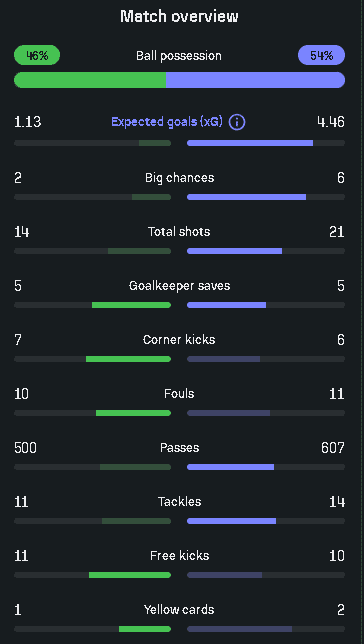
From there, the game became a little strange. Despite trailing, Scotland had more of the ball for a period, but it was empty possession, lacking creativity and heavily dependent on crosses. Against a Brazilian defence comfortable in the air, that was never likely to bring much success.
Brazil, meanwhile, always looked closer to a second goal. Vini Jr threatened again with an outside-of-the-foot effort and shortly afterwards even found the net after pressing Jack Hendry, winning the ball and finishing. The goal was ruled out for a foul, a debatable decision, but it served as a clear warning: Scotland were taking huge risks when playing out from the back.
Even so, the Scots tried to grow into the match. They pushed higher, increased the tempo for a few minutes, relying far more on intensity than quality. But the same limitation remained: very little ability to create through the middle and a predictable attacking approach.
And just when it looked as though the game might reach half-time with only one goal in it, Brazil effectively killed it. Deep into stoppage time, they won the ball high up the pitch, Bruno Guimarães lifted his head and delivered an excellent cross towards the far post, where Vini Jr arrived. The key detail here is that Vini is not known for his aerial ability, but he attacked the space brilliantly and headed home for 0-2. A rare goal of that type for him, but hugely important in terms of timing.
The second half immediately lost its competitive edge. Scotland tried to respond, with McTominay winning an aerial duel, but without creating any real danger. Brazil then began to exploit the available space more effectively.
The third goal arrived naturally. In the 61st minute, Bruno Guimarães was involved again, receiving the ball and quickly releasing Matheus Cunha on the right almost without looking. One simple touch and an efficient finish followed. A goal that summed up the game perfectly: Brazil clinical, Scotland permissive.
From that point on, it was over. The tempo dropped, the game became controlled and there was little urgency left. There was still time for the most anticipated moment: Neymar’s introduction. The crowd reacted, the name carries weight and expectations always follow. But on the pitch, very little happened. A few attempts, some combinations with Vini Jr, but nothing that truly influenced the game.
That says a lot in itself, because Brazil never needed to push harder and Scotland never had the tools to get back into the contest. In the closing stages they continued to rely on crosses, the same approach over and over again, and predictability rarely troubles an organised side.
Post-match
A comfortable victory for Brazil, achieved without needing to move through the gears. They were efficient when required and took full advantage of Scotland’s mistakes.
Scotland, meanwhile, confirmed what they had already shown: plenty of commitment, but very limited attacking quality.