
 · 2 min read
In this Spain vs Austria match, I analyse the key tactical moments, individual performances and turning points of the game.
There was some room for doubt before the game, largely because of Spain’s inconsistent World Cup campaign. But on the pitch, those doubts did not last long. It was not a perfect performance, but it was a controlled, mature display and, above all, far superior to anything Austria had to offer.
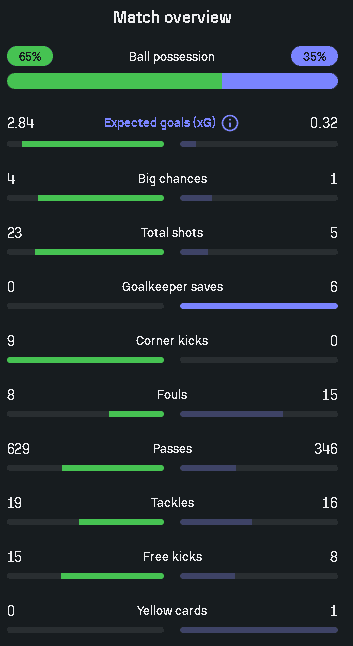
The opening stages were fairly even. Spain had a couple of moments on the counter, while Austria responded with good organisation and a certain level of aggression. But it quickly became clear where the game was heading: Spain dominated possession, Austria sat in a compact block, and struggled to play their way out.
There was one important detail here. Austria defended well enough, staying compact and organised, but whenever they won the ball back, they had no idea what to do with it. They lacked composure, they lacked quality, and that almost always resulted in the ball going straight back to Spain.
Spain, meanwhile, built their attacks patiently. Yamal was constantly being marked by two players, Olmo kept trying to find space between the lines, and Cucurella was very active down the left. It was not overwhelming dominance, but it was consistent.
There was an early warning from a set-piece, with Cucurella finding the net, but the goal was ruled out for a foul on the goalkeeper. The correct decision, in one of those situations that might easily have been given in other circumstances.
The legitimate breakthrough came in the 37th minute, and it summed up the game perfectly. The ball was worked down the left, Cucurella had time and space to make his decision, delivered a low cross, and found Oyarzabal completely unmarked in the box. All he had to do was adjust his body and finish calmly. A simple goal, but one that came from something Austria never managed to stop: freedom down the flanks.
Spain’s lead at half-time was fully deserved and could easily have been bigger. Austria offered virtually nothing going forward, and that was becoming increasingly obvious.
The expectation after the break was that Austria would respond, but it never really happened. They tried, pushed more players forward and played more directly, but everything was too predictable. They lost the ball easily and allowed Spain to stay in control.
Spain grew stronger because of that. More space, more confidence and greater emotional control of the game. It was no longer just about possession, it was also about creating danger.
The second goal, in the 66th minute, once again came from the left. Baena received the ball and delivered an excellent cross. Porro arrived completely unmarked in the box and headed home. Another move where Austria’s marking failed and Spain took full advantage without hesitation.
From that point on, the game was over. Austria still tried to make use of aerial balls, bringing on taller players, but with very little success. They were always missing something: accuracy, timing or quality with the final touch.
Spain, meanwhile, comfortably controlled the game through possession. No rush, no unnecessary risks, simply waiting for the right moment.
That moment came in the 89th minute. Once again down the left, once again with plenty of space. Cucurella drilled another low cross into the box and Oyarzabal was once again perfectly positioned. He finished calmly into the corner to wrap the game up in convincing fashion. 3-0.
Post-match
A strong response from Spain in a knockout match. They were not brilliant throughout, but they were disciplined, in control and clinical. Cucurella stood out with two assists, while Oyarzabal did the damage inside the box.
Austria, meanwhile, confirmed their attacking limitations. Well organised defensively, but simply lacking enough quality whenever they needed to play.