
 · 2 min read
In this Greece vs Germany match, I analyse the key tactical moments, individual performances and turning points of the game.
It was a repeat of the first meeting between Greece and Germany, but this time on Greek soil. The home side came into it as one of the surprises of this Nations League, with wins over Germany and Serbia and a draw with the Netherlands. On the other side, Klopp’s Germany were finally coming off a win, but the 2-0 victory over Serbia could easily have been 5-0 or 6-0. The problem was still the same: creating chances is one thing, converting them is another.
Wirtz was Germany’s captain today. It was Greece who created the first danger, in the 2nd minute, with Masouras winning the ball in the air inside the six-yard box. Urbig responded very well. After that, Germany started to take control of the game. Wirtz kept showing little signs of his quality in tight spaces and, in the 22nd minute, Scherhant forced a fine save from Tzolakis.
Greece defended like a true wall. In the 32nd minute, it finally looked like the German goal had arrived: Scherhant put in a low cross and Burkardt appeared between the two centre-backs to finish. It would have been his first official goal for the national team. But VAR found a handball from Bischof at the start of the move and the goal was ruled out.
And here, honestly, I think the decision is ridiculous. The ball hits his arm, yes, but this is one of those cases where the touch changes absolutely nothing about the move. It doesn’t alter the trajectory, create an advantage or seem to have any influence on the goal. But the rule is the rule and Germany were left without their 1-0.
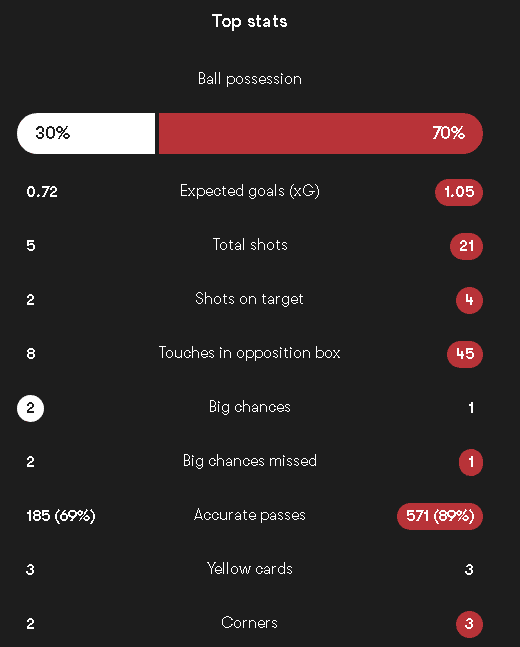
At half-time, the difference was huge: 74% possession for Germany, 13 shots to 1 and 0.59 xG compared to 0.14. Tzolakis had more touches than practically the entire Greek team, with nine Germans behind him. He was a wall.
But the second half was different. Greece had two shots in a single minute, more than in the entire first half, and started pushing higher up the pitch. Germany still had the ball, but were struggling to turn that dominance into danger. In the 65th minute, Scherhant had a good chance and put it wide. Shortly afterwards, Masouras appeared alone at the far post and headed narrowly wide.
The game, meanwhile, wasn’t exactly a great spectacle. It wasn’t exactly a dead game either, but it was missing those moments that really make a match gripping. And Greece started doing something interesting: by the 77th minute, they had 0.72 xG compared to Germany’s 0.89. Despite having much less of the ball, they were practically at the same level in terms of danger created.
In the 78th minute, Mavropanos came off and I didn’t understand the substitution. He had been excellent, was extremely strong in the air and clearly came off without understanding why. His reaction said it all.
Until the end, Germany continued to look for the goal. In the 86th minute, Wirtz crossed, Woltemade couldn’t get there and Treu was left with a good opportunity, but he couldn’t take it either. And that was that.
Post-match
The 0-0 leaves one clear conclusion: Germany have improved, but still have a lot of work to do. Having 74% possession and 13 shots in the first half looks good, but if you don’t turn that into goals, it counts for very little. In the second half, Greece even managed to be more dangerous. Klopp needs to solve exactly that.