
 · 2 min read
In this Japan vs Sweden match, I analyse the key tactical moments, individual performances and turning points of the game.
It was one of those matches that everyone knew could decide everything, but on the pitch it took a long time to feel that way. Japan and Sweden started with more fear of making a mistake than a desire to win, and it showed far too clearly.
Sweden actually made the better start. They were more aggressive in the duels, more direct and constantly looked to exploit their physical advantage, particularly in the air. But there was one obvious problem: they gained territory without creating anything. And that pattern continued.
Japan, meanwhile, grew into the game gradually. Not through chances, but through possession. They were more patient, more organised and tried to find spaces, even if they rarely succeeded. The match entered a slow, uneventful phase with very few key moments, little creativity and plenty of caution from both sides.
It was only shortly before half-time that something more meaningful arrived. A move down the left finally gave Japan some attacking momentum, with Keito Nakamura driving into the box and shooting with intent, forcing Jacob into a good save. It was not a clear-cut chance, but it was enough to show that Japan were trying something different.
Even so, the feeling at the break was obvious: far too little for a match with so much at stake. There was a lack of risk, a lack of quality in the final third and, above all, a lack of someone willing to take responsibility.
The second half changed that, although not consistently, more through isolated moments.
Japan started brighter, playing with greater freedom and making quicker decisions. It paid off in the 56th minute. The move was simple but well executed. Everything stayed on the ground, with no unnecessary complications. Doan received the ball, lifted his head and played a perfectly weighted pass into Maeda’s run. The key detail was Maeda’s composure. He did not overcomplicate things or force the finish; he simply guided the ball past the goalkeeper. A clean, well-worked team goal, exactly the kind of move that had been missing in the first half. 1-0.
But the game barely had time to settle. In the 62nd minute, Sweden responded immediately. Elanga received the ball on the right, took on his man, cut inside and shot. It was not an impossible effort to save, but the ball had just enough bend to deceive Suzuki. 1-1.
With the equaliser, the match finally came to life. Sweden grew in confidence, started believing more and enjoyed their best spell of the game. Isak tried his luck from distance, forcing Suzuki into action, and suddenly Sweden looked far more connected.
Japan, however, never disappeared. They stayed organised and continued to wait for the right opportunity. One moment could have decided everything: after winning the ball high up the pitch, Kamada delivered a cross and Koki Ogawa stretched to meet it, but could not direct his effort on target. It was exactly the sort of chance that wins matches like this.
The closing stages became completely open. There was far less control and far more emotion. Sweden looked the more likely side to find a winner, perhaps sensing the momentum was with them, but Suzuki proved decisive. First he denied Elanga, then produced another excellent save to keep out Isak’s difficult header.
Post-match
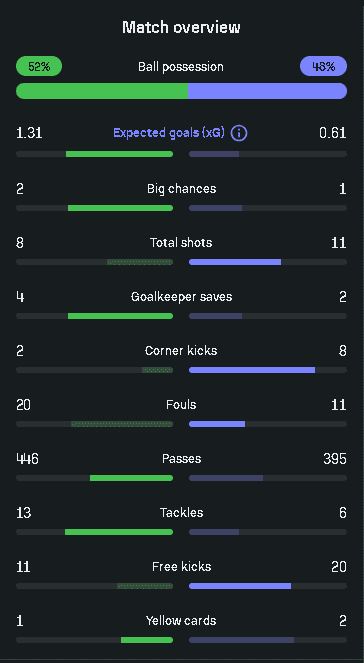
A draw that ultimately feels fair, although it leaves the sense that the match had the potential to offer much more. Japan were the more organised side and had the clearer game plan, but lacked sustained attacking aggression.
Sweden, meanwhile, relied heavily on moments and individual quality, particularly from Elanga, and only truly came to life after falling behind.