

In this Netherlands vs Algeria match, I analyse the key tactical moments, individual performances and turning points of the game.
A friendly on paper, but one that felt far more serious. The Netherlands and Algeria came into this match in a pre-World Cup context, the kind of game that is genuinely useful for drawing conclusions rather than simply rotating players. And from early on, there was a clear sense of imbalance, not so much in reputation, but in the way the teams presented themselves on the pitch. The Netherlands looked freer, more confident and more capable on the ball. Algeria looked restrained, reactive and clearly struggled to connect their play.
The first real threat came from a well-executed counterattack led by Summerville, who released Reijnders, and he in turn found Malen. The movement was good, the finish too, but the ball ended up hitting the post. It was the first clear warning from a side that looked comfortable and was finding space with ease.
Shortly afterwards came a move that perfectly summed up the Dutch attacking flow. Gakpo crossed, Summerville arrived well and set up Reijnders for the goal, but everything was ruled out for an offside earlier in the move. Even so, the impression remained: there was fluidity, there was connection and there was danger.
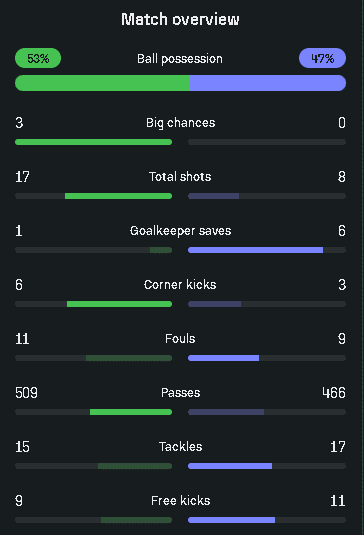
Algeria tried to respond, but without success. They had possession in spells and even managed to balance things statistically, but it was empty possession. There was no progression and no creativity. On the contrary, defensive errors and dangerous turnovers kept piling up.
Summerville continued to be one of the most active players and again found space on the right, driving forward before picking out Malen in a shooting position, but the effort went well wide. A difficult miss to justify, especially for a player trying to establish himself.
Gakpo also found space on the edge of the box and forced a good save from Luca Zidane, something that happened again after a high Dutch recovery, with the goalkeeper once more preventing the opening goal. In fact, if there was one standout performer for Algeria in the first half, it was Luca Zidane, because the team was giving away far too much.
Algeria’s only attacking sign of life came from a set piece, a corner that eventually resulted in an easy save. Far too little from a team that, despite being inferior, could and should have offered more.
The second half did not change the pattern much. Malen had another huge opportunity after a defensive mistake, beating two players before finishing poorly and wide. Another moment that summed up his game: involved, but ineffective. At the other end, Amoura made an interesting run in behind, but Van Hecke dealt with it cleanly. It was one of the rare occasions when Algeria managed to approach the Dutch goal with any real purpose.
The Netherlands kept pushing. Kluivert tried his luck from distance and again forced Luca Zidane into action, and later there was a neat combination involving Kluivert, Gakpo and Depay, but the final touch was always missing.
And this is where the game took on an almost ironic twist. So much dominance, so many chances, and not a single one converted. Algeria, despite not playing well, stayed alive. And they took advantage.
In the 86th minute, the ball found Anis Hadj Moussa on the right. He received it one-on-one against Hato, cut inside with quality and unleashed a powerful, well-placed shot with no chance for the goalkeeper. A moment of pure individual talent in a match where he had barely featured. 0-1.
Until the final whistle, there was more emotion than quality. The Netherlands tried to react, but without clarity. Algeria held on, earning credit for their resilience, but also leaving the strong feeling that they were clinical in the only moment they truly created danger.
Post-match
A misleading result considering how the game unfolded. The Netherlands were clearly superior for long periods, created more chances, reached dangerous areas more often and had several clear opportunities, but lacked efficiency, especially Malen, who delivered a very poor finishing performance.