

In this Portugal vs Nigeria match, I analyse the key tactical moments, individual performances and turning points of the game.
Portugal said goodbye to home before the World Cup with a demanding test against Nigeria, in a match that carried more meaning than a simple friendly. Given the context of the city of Leiria, the opponent, and the need to fine-tune ideas, it was important to do more than just win: it was important to understand where the team currently stands.
The start was balanced, with no clear dominance. Portugal pressed, but without much effectiveness, while Nigeria looked comfortable playing out from the back, especially by exploiting their physicality and ability to win duels. Early on, Ronaldo had a clear chance after a pass from Nélson Semedo, but failed to finish, in a situation where he had everything to do better. At the other end, Akor Adams responded almost immediately, driving into the box, cutting inside and getting off a dangerous shot.
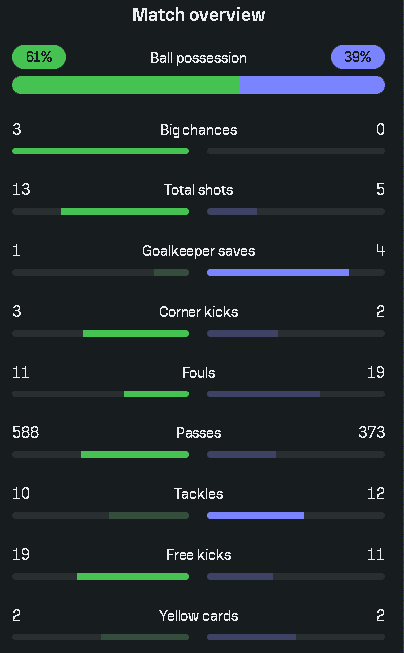
It was a divided game, with Portugal having more possession but not real control. Nigeria, even with less of the ball, looked more comfortable in physical battles and transitions. Still, as the minutes passed, Portugal grew into the match and started finding better spaces, especially down the left flank.
The goal came in the 23rd minute and was a good example of that. The move started with Trincão switching play to Dalot on the left, who timed his action well and released Pedro Neto. Inside the box, Neto made his trademark move, cutting onto his left foot and curling a shot into the far corner with no chance for Okoye. A well-constructed move, with quality and composure in the final decision.
Portugal improved after the goal, gained some control and got closer to the opposition goal more frequently. Bruno Fernandes forced a good save from Okoye and Ronaldo appeared again with a header, but failed to hit the target. Trincão also tried his luck from distance, without success. There was more attacking presence, but still without complete consistency.
And just when it looked like Portugal were on top, the equaliser arrived in the 37th minute, exposing some weaknesses. A long ball from the Nigerian goalkeeper, the forwards win the physical battle and react first, the ball falls to Adams, who drives forward, gets past Rúben Dias and finishes. The shot goes underneath Diogo Costa, in a situation where the goalkeeper could have done better. 1-1.
The second half brought major changes, with Portugal replacing almost the entire team, keeping only Diogo Costa and Ronaldo on the pitch. The tempo dropped and the game lost intensity. Even so, there were some interesting moments, especially through João Félix, who forced a good save from Okoye and later hit the crossbar with a powerful long-range effort.
Nigeria virtually disappeared offensively during this period. Unable to play out with quality or create danger, they became pinned back in their own half. Portugal, even without great intensity, kept things under control.
The winning goal arrived in the 75th minute and once again individual quality made the difference. Francisco Conceição received the ball on the right, took on his defender one-on-one, cut inside as he usually does and curled a shot into the far corner. A goal very similar to Pedro Neto’s, reinforcing the idea that individual talent can decide matches.
There was little more to note until the final whistle. Nigeria still tried to break on the counter-attack, but Portugal always managed to recover defensively. In the end, it was a match with some interesting moments, but also clear signs that there are still things to improve.
Post-match
Portugal showed individual quality and the ability to find solutions, but still struggles to dominate matches consistently and continues to display clear defensive weaknesses.
Nigeria, meanwhile, confirmed their physical strength and ability to compete, but revealed many limitations on the ball, relying far too heavily on direct play.