
 · 2 min read
In this Switzerland vs Canada match, I analyse the key tactical moments, individual performances and turning points of the game.
It was a game with real competitive weight. Final group-stage matchday, a direct battle for first place and, above all, the difference between an easier or more difficult path in the knockout rounds. And that could be felt. Not so much in the quality, but in the tension.
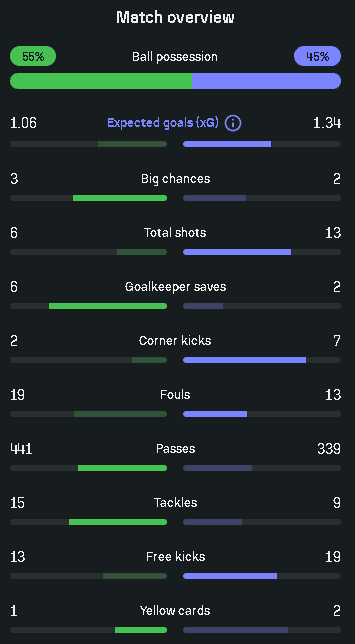
Neither team had truly convinced up to this point and that showed again. Switzerland started better, more comfortable on the ball, spending more time in the attacking half, but always with a degree of predictability. Even so, they created the first genuinely dangerous moment. In the 11th minute, Ricardo Rodríguez played a perfect through ball to Embolo, who found himself one-on-one with time and space, but finished poorly, straight at the goalkeeper. The ball then fell to Manzambi, whose effort was blocked by a defender. It was far too good a chance not to result in a goal.
Canada took longer to settle, but when they did, they showed they could hurt Switzerland. Not with great volume, but with some purpose. The game became more physical and more nervous, something that was evident in the 30th minute when Larin kicked the ball away unnecessarily and ended up causing a small confrontation with Xhaka. Nothing major, but the atmosphere heated up.
Within that context, Canada had a good opportunity through Larin, who received the ball in the box during a transition, hesitated and then shot with his right foot under pressure when he had every chance to finish earlier with his left. The wrong decision in a promising situation.
Overall, it was an even first half without much quality. Switzerland had more of the ball, Canada were more direct when they managed to break forward, and there was a feeling that the game could go either way.
The second half changed early and changed significantly. In the 46th minute, Switzerland broke the deadlock. Manzambi attacked the space, received the ball on the right and delivered it into the area. Vargas arrived completely unmarked, with enough time to control, think and pick his finish. The ball even struck the post before going in. A clear mistake from Alistair Johnston, who completely lost his marker and allowed far too much space inside the box. 1-0.
Switzerland grew in confidence and maintained control. Not by increasing the tempo, but by looking more comfortable. Then in the 57th minute came the second goal. Embolo received the ball, held it up well, drew in two centre-backs and released it at exactly the right moment for Manzambi, who arrived facing goal. The shot was not perfect, Crépeau even got a hand to it, but the ball still went in. A well-worked move, although the goalkeeper must take some responsibility.
With a two-goal lead, Switzerland began to concede possession and Canada realised they had to take risks. The direction of the game shifted. More possession for the Canadians, more presence in the attacking half and greater aggression.
That paid off in the 76th minute. Saliba ran onto a pass, produced an excellent first touch under pressure and lifted the ball into the area. Promise David arrived on the move and finished first time, stretching to make contact, with the ball flying in beyond the goalkeeper. A goal that brought the game back to life. 2-1.
From then on, there was more emotion than control. Canada grew into the match, believed they could get something and began to push forward. Cornelius came close with a dangerous header, while Switzerland started to struggle to keep hold of the ball. They could no longer control the game as they wanted.
Then, deep into stoppage time, Promise David had another headed opportunity, but the effort lost power after bouncing off the ground.
Post-match
Switzerland did enough to win, largely thanks to their efficiency and Canada’s mistakes. It was not a brilliant performance, but it was a competent one when it mattered.
Canada paid heavily for their defensive errors and their lack of decisiveness in key moments. They grew into the game late, responded well, but ultimately fell short. The feeling remains that they could have done more.