
 · 2 min read
In this England vs Congo match, I analyse the key tactical moments, individual performances and turning points of the game.
It was a typical knockout game where the favourites came in carrying the responsibility, but the team that scored first completely changed the course of the match. And that was exactly what happened. England started with the intention of controlling the game, but they were caught out very early by a fearless DR Congo.
In the 6th minute, Mbemba played a long ball into the space down the left side of England’s defence, where Cipenga found far too much room. Spence followed Sadiki’s run inside and left that space wide open. Cipenga controlled the ball, set himself and fired a powerful shot into the near corner. It was a moment where Pickford could clearly have done better, because that was his side. And suddenly, the whole game changed.
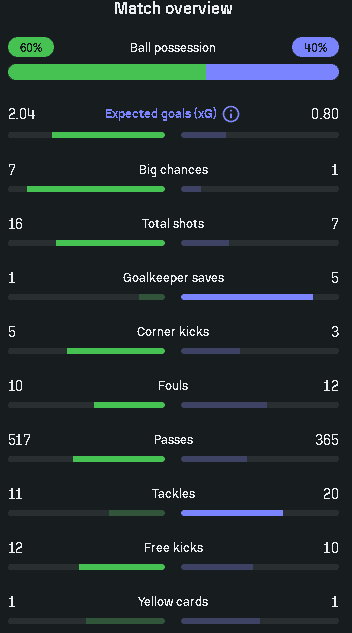
From then on, the expected pattern settled in: England had the ball, while DR Congo sat deep and defended comfortably. But there was one important detail: DR Congo did not just defend. They were able to break out, keep possession at times and relieve the pressure, which made things even more difficult for England.
England once again showed the same problems they had displayed throughout the tournament. Too many crosses, very little creativity through the middle, and Kane often isolated between the centre-backs. The player trying to make things happen was Bellingham, constantly demanding the ball, finding space between the lines and trying to link everything together.
Even so, England’s best chances started to come. Bellingham forced a brilliant save from Mpasi Nzau with a header, Rashford had an effort from inside the box that struck Wan-Bissaka almost on the goal line, and Kane also had his moments, but was always well dealt with.
At the other end, DR Congo continued to look dangerous whenever they broke forward. Wissa even hit the post during one of those attacks, showing that they were not just holding on, they posed a genuine threat.
The second half followed the same pattern, but with England applying even more pressure. More possession, more attacking presence, but still struggling with the final decision. Mpasi Nzau kept delaying the inevitable with a series of good saves, and time was beginning to run out.
In the 75th minute, after a sustained attack, the ball was worked around the box before Gordon lifted a cross in from the left. Kane ghosted in behind the centre-back, who defended the situation poorly, and headed towards goal. The goalkeeper got a hand to it, but could not keep it out. It was a goal that came through persistence. 1-1.
With the equaliser, the game changed once again. DR Congo began to fade physically, no longer able to get out or relieve the pressure. England sensed that.
In the 86th minute, Kane stepped up again. He received the ball with his back to goal, turned his defender, drove to his right and, despite having very little space, unleashed a powerful, accurate strike. A brilliant goal, the kind only a striker can produce on his own. 2-1.
Until the final whistle, DR Congo still tried to push forward, driven more by determination than organisation, but they no longer had the quality to create any real danger.
Post-match
A hard-fought, but expected, victory for England. They once again struggled against a deep defensive block and once again relied heavily on moments of individual quality, but Kane delivered when it mattered.
DR Congo, meanwhile, produced a very impressive performance. They caught England by surprise early on, competed well throughout, but could not hold on until the end.